How good are you at being on your own side when it actually counts?
I know you’re great when you've got a cup of tea, a journal and 20 minutes to reflect on your patterns.
But what happens when someone has just criticised you?
When you realise you've messed something up.
When you've been offered an opportunity you really want and your brain immediately starts producing reasons you're not ready.
When someone asks you for something and you can already feel yourself automatically saying yes.
When you know you need to actually have the conversation in real life, not just in your own head.
When you're tired, behind, scared, embarrassed, jealous, overwhelmed or just really, really don't want to do the thing.
Who takes over then?
Because most of us are remarkably good at understanding ourselves when nothing particularly challenging is happening.
But what we actually want is to be able to apply that wisdom in the moments when life is life-ing.
That’s the only way things change.
Take people pleasing
You already know you do it.
You understand where it came from.
You can identify the exact sensation that appears in your body when someone might be disappointed in you.
You've read about boundaries and you love the idea of not caring what other people think.
Excellent.
Then somebody says:
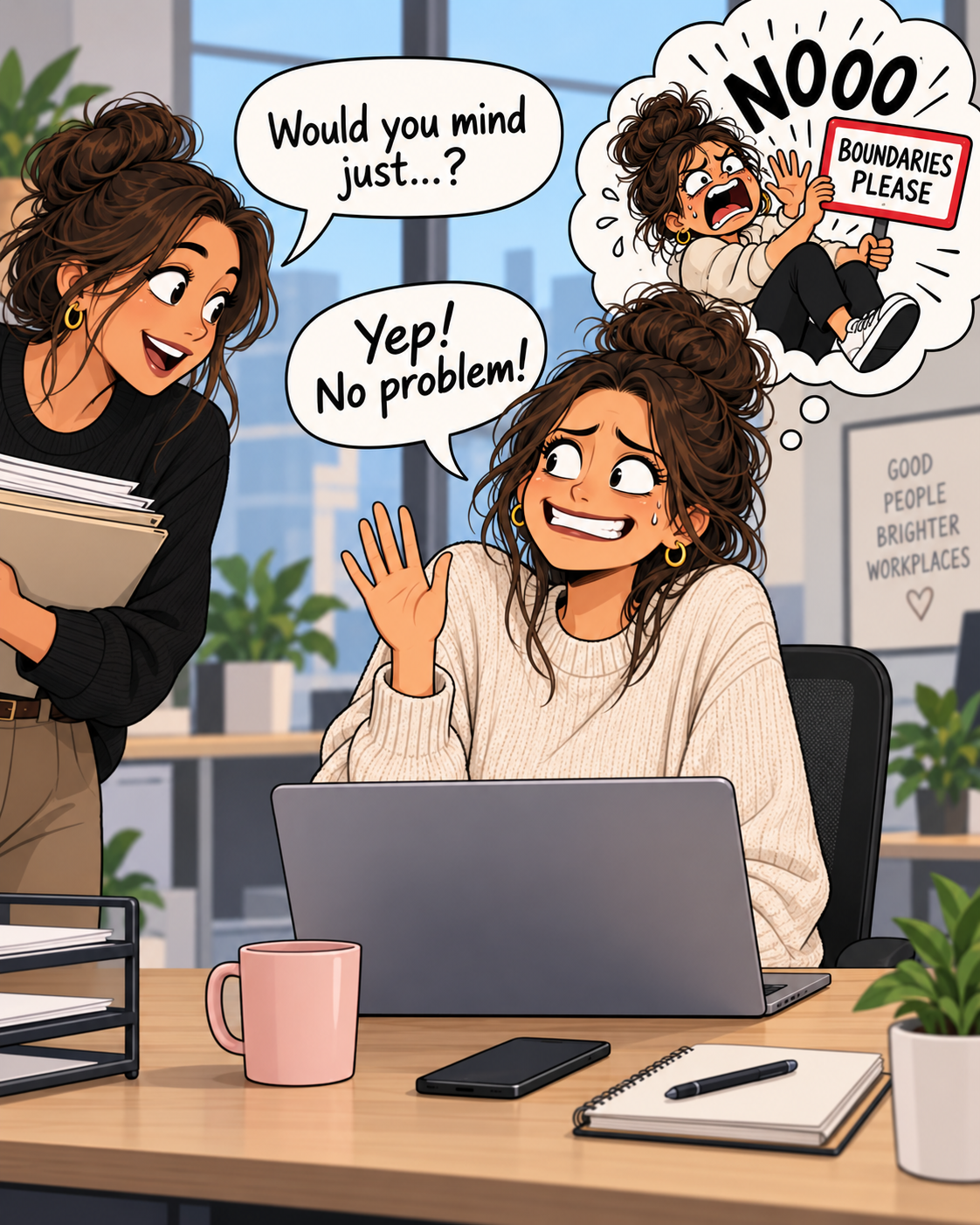
“Would you mind just...?”
And 20 seconds later you've agreed to something you absolutely did not want to do.
Apparently your mouth didn’t get the message that you weren’t going to do that anymore.
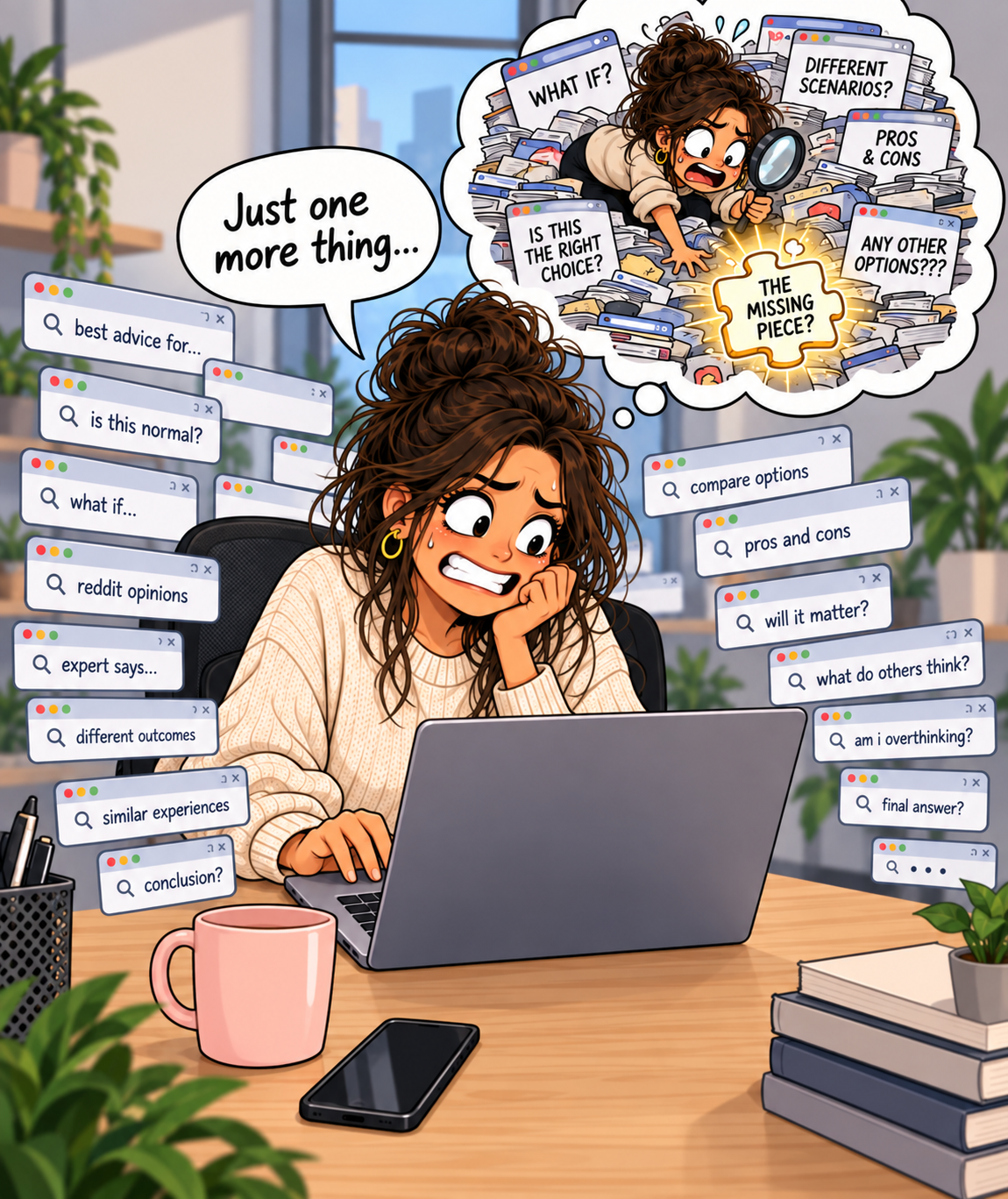
Or maybe your ‘thing’ is overthinking.
You know that going around the decision another 17 times is unlikely to reveal the sacred missing piece of information.
You know you can't guarantee the outcome.
You know you're probably frightened of getting it ‘wrong’.
And yet here you are… with 24 tabs open… researching 1 more thing hoping that will make you feel better about the decision you need to make.
This is the bit of personal development I think we've under-taught.
We've got pretty good at asking:
Why am I like this?
Less good at:
Okay. I can see what’s happening. What do I do now?
Without the ability to notice what’s happening in the moment, we miss the chance to change it.
It’s all well and good being able to accurately discuss your attachment style with your therapist, or being able to trace exactly which childhood experience might explain why feedback makes you want to crawl out of your own skin.
But what you actually want is to stop pushing away the good partners because you’re used to chaos.
Or to receive feedback from your boss without having to dig a thumbnail into your finger to stop yourself from crying.
You don’t want more awareness for the sake of it.
You want your awareness to change something about the way you actually live.
The annoying thing is, you probably already know what you could do differently.
If people-pleasing could be solved by someone telling you to “just say no”, you'd have done it by now.
If overthinking disappeared when someone said “stop overthinking and make a decision”, you could close the 24 tabs.
If receiving criticism was simply a matter of remembering “feedback isn't personal”, your nervous system presumably would have got on board years ago.
Most of the time, the problem isn't that we don't know what a healthier, braver or more sensible response would be.
The problem is actually being able to choose it when every part of your system wants to do the familiar thing instead.
When your throat is tightening.
When your brain is producing 12 excellent reasons to not do the thing.
When your chest is heavy.
When you’re looking someone in the eye and don’t want to say what you need to say.
When your body wants to leave the room.
These are the moments this work is interested in.
Not just understanding the pattern afterwards.
Not analysing yourself from a safe distance.
Being able to stay with your self while it's happening.
Because changing how you live doesn't usually happen in the journal entry afterwards.
It happens in the few seconds where the old response is pulling you one way and something in you knows you want to choose another.
That is where
With Love & Courage
becomes a practice
With Love
Because the part of you reaching for the familiar isn't stupid or broken.
It's trying to protect you in the way it knows how.
You don't need to shame it, bully it or wage war against yourself.
It needs your compassion in order to trust it can let go of the reins.
&
With Courage
Because understanding why the familiar feels safer doesn't mean you have to keep choosing it.
You can stay with the fear.
Stay with the discomfort.
Stay with the uncertainty.
And still take a step towards the life you actually want.
With Love & Courage is a way of being with yourself in those moments.
Present enough to notice what's happening.
Compassionate enough not to turn against yourself for it.
Courageous enough to choose something different when that’s what you really want.
This is what I mean by Leading Your Self With Love & Courage.
Leading Your Self With Love & Courage
A 6-week live programme for practising this in your actual life.
Not just understanding your patterns.
Not just knowing what you should do.
But getting better at noticing yourself in the moments when the old response is pulling hard and staying with yourself long enough to choose what happens next.
The conversation you're avoiding.
The feedback that makes your stomach drop.
The decision you've been going around in circles about.
The opportunity you want but are frightened to take.
The moment you're about to say yes when you mean no.
The mistake you've made and can't stop beating yourself up about.
The day you're exhausted and can't tell whether you need to rest or whether you're hiding.
Over 6 weeks, we'll practise meeting those moments differently.
With enough love that you don't have to shame, bully or abandon yourself into change.
And enough courage that fear, familiarity and other people's expectations don't automatically get to make the decision for you.
This isn't about becoming perfectly self-aware or perfectly self-led.
It's about increasing your capacity to catch yourself while life is actually happening — and have more choice about who you are and what you do next.
Without the ability to notice what’s happening in the moment, we miss the chance to change it.
It’s all well and good being able to accurately discuss your attachment style with your therapist, or being able to trace exactly which childhood experience is linked to your lack of tolerance for feedback.
But what you actually want is to stop pushing away the good partners because you’re used to chaos. Or you want to be able to receive feedback without digging your nail into your finger to stop yourself from crying.
You don’t want a journal full of insights about you/life, you want to live a life that feels full.
It's shaped by what happens in moments like these →
You want to share your ideas in the work meeting.
Do you do it? Or does your throat clamp shut each time you even think about it so you take that as a sign not to?
You want to try something new.
Do you go for it? Or do you convince yourself that watching videos of other people doing it is enough?
Someone is unhappy with a choice you made for yourself.
Do you acknowledge their emotions but stick with your choice or do you immediately apologise and change your mind to suit what they want?
You make a mistake.
Do you repair it, or spend three days attacking yourself and wishing you had a Time-Turner necklace?
You're exhausted.
Do you let yourself rest, or force yourself onwards because stopping feels like failure?
These “little” moments add up to become your life.
And that's the moment where something can actually change.
Not 3 hours later when you're replaying the conversation in the shower.
Not tomorrow when you're journalling about why you said yes again.
Not next week when you've worked out exactly which childhood experience explains why criticism makes you want to crawl out of your own skin.
In the moment.
When you can feel yourself about to say yes when you want to say no.
When your throat tightens before you speak.
When you realise you're getting defensive.
When you're 12 tabs deep into researching a decision you already have enough information to make.
When you've made a mistake and can feel the familiar urge to berate your entire existence.
When something you really want is suddenly available to you and every alarm bell in your body starts ringing.
That's the moment.
Because in that moment, you still have a choice about what happens next.
And those choices can look “small”:
Do you say what you actually think?
Do you ask for a minute before answering?
Do you listen to the feedback instead of immediately defending yourself?
Do you let someone be disappointed?
Do you apologise without turning yourself into a terrible person?
Do you rest?
Do you go for the opportunity before you feel ready?
Do you admit that you really want this?
These seemingly “small” moments become the way you live your life.
And what happens next doesn't only depend on what you're feeling.
It also depends on how you respond to yourself while you're feeling it.
When you're scared, do you listen to the fear, or immediately let it make the decision?
When you've made a mistake, do you deal with what happened, or start attacking yourself?
When you're tired, can you work out whether you genuinely need rest, or whether you're avoiding something uncomfortable?
When someone is disappointed in you, can you tolerate that, or do you immediately start trying to make everything okay again?
When you want something, can you let yourself want it, or do you start explaining why it probably wouldn't work anyway?
Because most of us already have familiar ways of responding to ourselves in these moments.
We push.
We criticise.
We reassure.
We avoid.
We override.
We retreat.
We tell ourselves to get a grip.
Or we tell ourselves it's fine and we don't have to.
Sometimes those responses are exactly what we need.
Sometimes they're the very thing keeping us stuck.
And I think this is where the question of how we lead our self becomes interesting.
What